Ten Browser Games to Settle Arguments With a Friend
By IPObrains Editorial 5 min read
Ten free browser games that get better with a second person in the room, plus how to share one screen without anyone sulking.
Someone is sitting next to you, the kettle has just boiled, and you have about four minutes before the conversation drifts back to whose turn it is to wash up. That's the window a two-player browser game has to fit into. If the rules take longer to explain than a round takes to play, you've lost them.
So these ten were chosen with that window in mind. They all run in a browser tab, they're free, and not one of them asks you to sign up. Load the page, point at the screen, say "you're blue", go.
A loose definition of multiplayer
I'm being generous with the word. Only one game here is actually labelled multiplayer. A couple are proper head-to-head scraps on a shared screen. Some take turns by nature, so you can pass a phone across the table without anybody losing track of the score. And a few are single-player games with a score so public that anyone watching will insist on having a go. The common thread is simple: each one improves the moment a second person walks in.
The thing I'd look for in any of them is a small number of buttons. Every extra control is another minute of teaching, and the best possible outcome of an evening is getting thrashed by someone who picked the game up thirty seconds ago.
The list
Sumo Shove goes first because it needs no explanation at all. It's a free action game about pushing, and pushing is something everyone already understands. Keep a running score between the two of you and use it as a tiebreaker for household disputes.
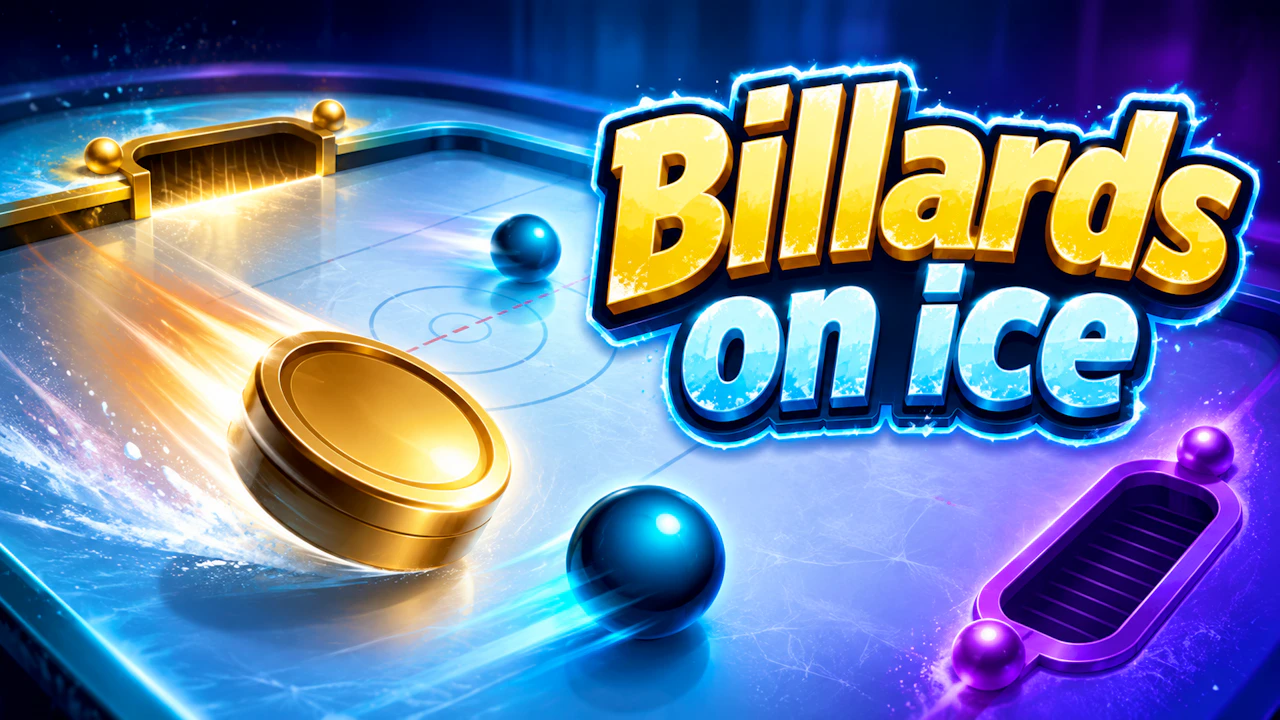
Billiards on Ice is pool, apparently on ice if the name is anything to go by, so I'd expect the balls to keep travelling long after felt would have stopped them. Pool is built around turns anyway. Hand the device across after every shot and nobody forgets where they were.
Penalty Kick Wiz is a duel of shooting and saving that comes down to split-second calls. Penalties were always the fairest bit of football. One of you shoots, the other watches, then you swap, best of five.
Yenemy is the only game here that its listing calls multiplayer outright, and it's free. Grab a friend, keep a tally, done.
Knockback Knights is, judging by the title, about knights knocking each other backwards, so where you plant your feet probably matters as much as the swinging itself. Play first to five, then swap sides so nobody can blame the starting spot.
Then come the two stickman games, which are quite different animals. Stickman Street Fighting 3D is a brawler where smashing objects earns power-ups and you can grab weapons along the way, which gives two players something to squabble over. Stickman Warriors leans towards RPG territory: you climb ranks and build up your attributes. Don't expect a quick duel from that one. Compare progress over an evening instead.
Math Fight Club turns mental arithmetic into combat, and fast calculation is how you beat whoever you're up against. Give the same sums to two people with an audience and watch seven times eight suddenly become very hard indeed.
Funny Shooter 2 has odd-looking enemies and weapons you can upgrade. By itself it's a solo game. Take turns, compare how far each of you got, and it turns into a contest.
Slope Racing 3D closes the list purely as a distance challenge. You steer a ball down a slope that keeps changing shape, past obstacles, boost pads and gems. Agree a target, pass the keyboard over, and wait for your friend to crash at precisely the spot that got you.
Sharing the screen properly
Online lobbies have their place. Still, an opponent sitting a metre away beats a stranger every time. You can see their face fall when they mess up, they can see you being smug about it, and nobody vanishes halfway through because their Wi-Fi gave up.
Turn-based games need a format agreed up front. Best of three frames on the billiards, five kicks each on the penalties. Without a set finish, "one more" carries on until somebody's dinner goes cold.
Reflex games want a different rule. Swap after every death rather than every round. That way the waiting player stays involved, and it stops whoever's better from hogging the screen for ten minutes at a stretch.
On a phone, lean it against a mug or a book. Handing a device back and forth works far better when it's propped up and both of you can watch between goes.
The first ten minutes
Every new multiplayer game starts the same way: nobody knows where the limits are. With Sumo Shove that probably means finding out how near the edge you can stand before you're in trouble. With Knockback Knights it might mean learning how far a single hit actually sends you. I'd happily throw the first two rounds just to test those boundaries. You'll win more of the rest.
Keep the sound on. Lots of small browser games give away a hazard or an incoming attack with a sound that arrives a split second ahead of the visual, and in a tight duel that split second decides things.
If you're clearly the stronger player, don't coast. Handicap yourself. Play with one hand, or begin each round a point down. A close match is more fun for both of you than a run of easy wins, and it's the only way the other person agrees to play again next week.
If the room wants something calmer
Some evenings nobody fancies yelling at a stickman. For a group that prefers thinking to reacting, try our piece on strategy games that train your brain, and puzzle people should head for the best puzzle games round-up. Going the other way, if you want more speed, the top action games list is where I'd look.
My actual advice is boring, though. Choose one game, play it ten times against the same person, and resist moving on until you've done that. The rematches are the whole point.