Brain-Training and Memory Games That Are Actually Fun
By IPObrains Editorial 5 min read
Memory, logic and number games that hold up as games first, with an honest note on what playing them can and can't do for your head.
Let's get the awkward part out of the way. No browser game is going to raise your IQ, ward off anything medical or turn you into someone who never loses their keys. If a game promises that, it's selling something. What a good memory or logic game can do is give your attention a proper job for ten minutes, and get noticeably easier the more you play it. That's practice at the game, which is a real and pleasant thing. It just isn't a brain transplant.
So the bar here is simple. Each pick has to be fun on its own terms, the kind of thing you'd play even if nobody had stuck the word "brain" on it. Most of these are free browser games, which helps, because trying one costs you a tab and nothing else.
Sequence games: watch, then repeat
The purest memory test is the oldest one. Something flashes up, it disappears, you play it back. Every round adds one more item, and eventually you fall off the end.
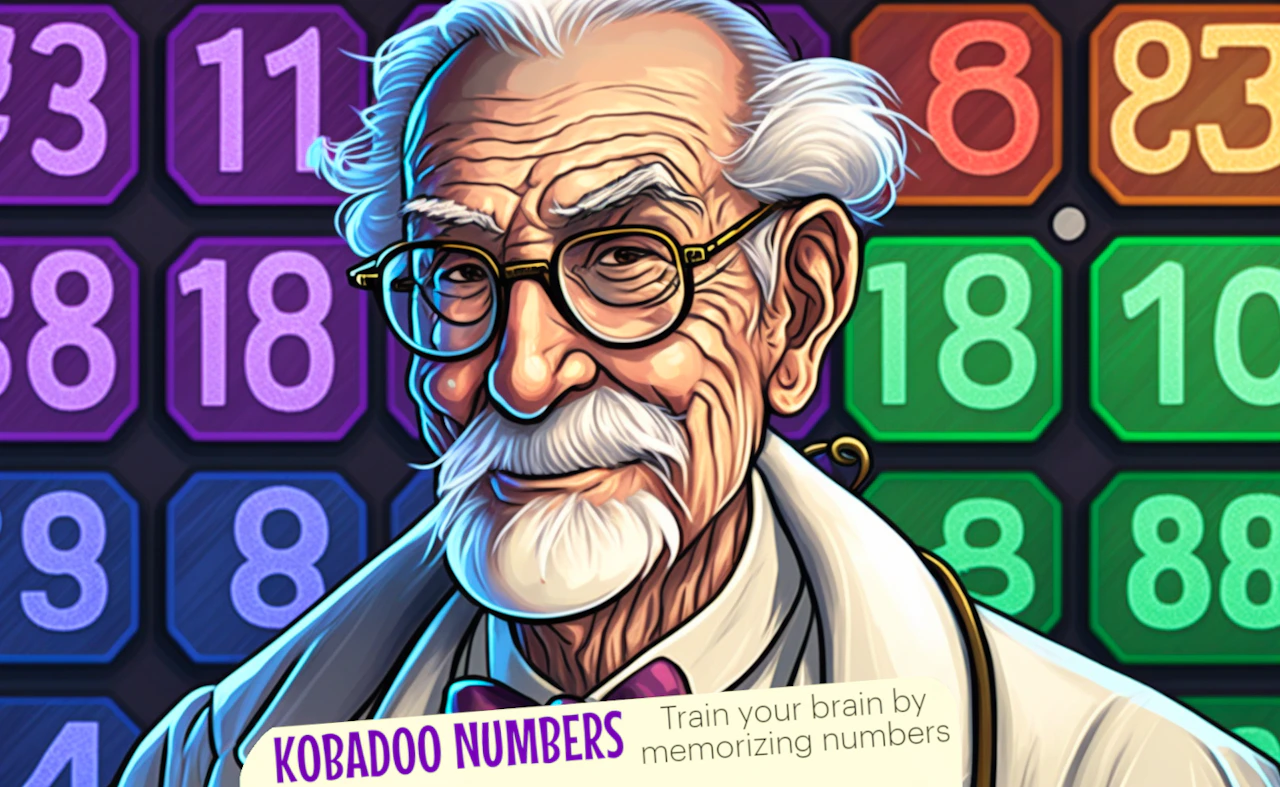
Kobadoo Numbers is where I'd start. You see strings of two-digit numbers and repeat them in the right order, with the difficulty rising every round. Two-digit numbers are trickier than they sound, because you're holding pairs rather than single items, and the obvious trick of saying them under your breath only carries you so far. It runs in any orientation, so a laptop works as well as a phone.
Color Echo is the gentler cousin. Colours light up, you echo them back in order, and that's the whole game. It's laid out for an upright phone and suits people who find numbers tiresome. Skip it if you've already played a dozen versions of the old flashing-buttons toy, because it doesn't pretend to be anything else.
Kobadoo Arithmetic folds sums into the sequence idea: memorise number strings and solve calculations as the levels get trickier. It sits in the junior section, but adults who haven't done mental maths since school may find it humbling for longer than they'd like to admit.
Card-flip games: the honest kind of memory
Pairs games have one rule and no hiding place. Two cards up, two cards down, remember what was where. The skill is entirely yours, and so is the blame.
Memory Flip is the plain version: face-down cards, find every matching pair, and fewer wasted flips means a better run. That last part is the interesting bit. Clearing the board is easy given enough guesses. Clearing it efficiently means building a little map in your head and trusting it.
Magic Memory is the same idea with a magic theme and a layout that works on phones and desktops alike. Pick whichever look you prefer; the mental work is identical.
BattleBox adds stakes. You memorise a hidden grid to grab treasure while avoiding monsters, and one wrong square puts you face to face with one. Strawberries top up your health when it goes badly. It turns a dry recall exercise into something with a bit of tension, which is a decent trick for keeping you playing past the point you'd normally get bored.
Logic grids for slower thinking
Memory games are quick and twitchy. Logic puzzles are the opposite: no clock pushing you, just a grid and the rules. If you want a game that rewards sitting still and reasoning properly, this is the shelf.
Sudoku Master Classic Logic Puzzle is straight sudoku. Fill the nine by nine grid so every row, column and box holds one to nine, with pencil marks for your working and no guessing needed. That "no guessing" part matters. A well-made sudoku always has a logical next step, and finding it is the satisfaction.
Dogdoku runs the same row, column and box rules with a dog theme and an upright layout. It's a nicer way in if a grid of digits makes you think of tax forms.
Crypt Breaker is a set of brain teasers with a crypt theme, and its whole advice is to slow down and read each puzzle properly. That's sound advice for every game on this page. Cozy Scale is the calm one: you balance a scale by choosing the right weights, then move on to the next setup. No monsters, no countdown, just a small problem that needs a bit of thought.
Numbers under pressure
Some people think best with a little heat on. Math Fight Club sets sums in a fighting ring: solve equations quickly to knock out opponents, customise your fighter, and collect each beaten rival's mask on the way to the champion title. It's aimed at younger players, but the speed element makes it a fair test for anyone. Skip this one if timed arithmetic makes you tense rather than sharp.
When you want to be tricked instead
Trick-question puzzles work a different muscle. They're less about recall and more about noticing that the question is lying to you.
On phones, Brain Test: Tricky Puzzles is the best-known of these. It's free with a 4.8 rating, has no timer, and each level is worded to lead you the wrong way while the answer sits right in front of you. It's free with ads, and the VIP Package is a weekly subscription that renews automatically after a three-day trial, so check your settings if you try that. Prodding odd corners of the screen works better than any fixed method.
In the browser, Help Me - Brain Tricky Story does a similar thing with little stories: each scene has a problem and a less-than-obvious fix. It's portrait, quick, and good for passing round a room.
How to get better without kidding yourself
A few habits make these games more fun, and they're honest about what's happening.
- Play the same game for a week rather than a new one every day. Improvement you can see is the main reward here.
- In sequence games, group items into chunks. Four numbers held as two pairs is easier than four loose ones.
- In pairs games, flip unknown cards in a pattern, row by row, so your mental map stays tidy.
- In logic grids, stop the moment you're about to guess. There's almost always a step you've missed.
None of that will change your life. It will change your scores, and the climb from mediocre to decent is the bit that makes a memory game worth coming back to.
If you liked the logic shelf most, the guide to strategy games that train your planning picks up where this one stops, with longer games that reward thinking several moves ahead. Everything above is no download, so you can try three of them before the kettle boils and keep whichever one annoys you in the right way.