Tower Defense Games, From Gentle Starters to Fiendish
By IPObrains Editorial 5 min read
Ten free tower defense games ordered by how much they ask of you, plus the placement and economy habits that carry over from one map to the next.
Most tower defense losses happen in the first thirty seconds, long before the wave that actually breaks you. You spend your opening gold on whatever looked strongest, park it somewhere that seemed sensible, and twelve waves later the path is full of enemies walking past a tower that can't reach them. The genre is forgiving about reflexes and brutal about early decisions.
That's what makes it such a good fit for free browser games. Nobody needs fast hands. You need to look at a map, think about where things will walk, and spend money in the right order. The games below are sorted from gentle to fiendish, judged by how many things each one asks you to juggle at once, and the tips at the end apply to nearly all of them.
The gentle end: learn the shape of the genre
Merge Cat Defense is the softest way in. You combine two identical cats into one tougher cat, then line them up to keep intruders out. It's described as a gentle defense game for kids, and it is, but it teaches the single most useful habit in the genre: stronger units in the right spot beat lots of weak ones scattered about. It plays with the screen sideways.
Idle Defense - Cosmic TD leans the other way. You place and upgrade cosmic towers, then let them do the work while the waves roll in. The idle streak means you can check in briefly rather than watch every second, and it runs on any device. Skip it if you want tension; pick it if you want to learn how upgrades stack without being punished for a slow decision.
Granny vs The Bugs is where planning starts to matter. Granny has had enough of the bugs, and you organise the defence. Its own pitch is that placement and timing matter more than speed, which is a fair summary of the whole genre. It's laid out for a wide screen.
The middle: economy starts to bite
Once a game makes you choose between building something new and upgrading something old, you're in proper tower defense territory.
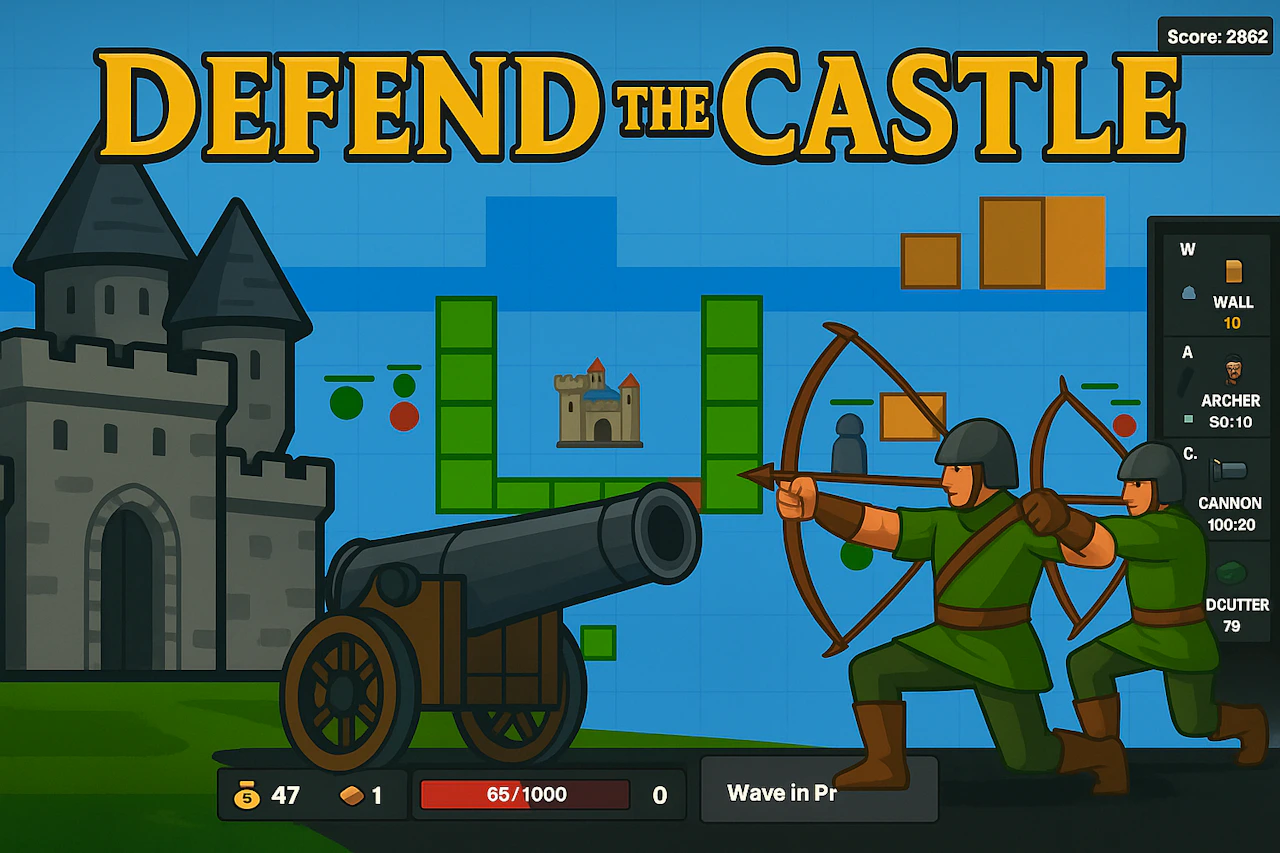
Defend the Castle is the one I'd point most people at first. You protect the King by placing archers and cannons against wave after wave of attackers, and gold and wood pay for both building and upgrading. Two resources sounds like a small thing, but it means every purchase has a real cost elsewhere. Placement is entirely yours, and it's set up for a phone held upright, which is rarer than it should be in this genre.
Tower Defense is the plain, no-theme version. You choose units and where they go, balancing range, speed and power, and the enemies get tougher over time so your layout has to change with them. That last part is the lesson. A layout that handles wave three beautifully is usually wrong for wave fifteen. It's best on a wider screen.
Merge defense: a little luck in the mix
Merge-based tower defense adds a second puzzle on top of the first. You aren't only deciding where towers go, you're deciding which ones to sacrifice to make a bigger one.
Fortress Merge Tower Defense puts both ideas side by side: merge matching towers to power them up, then place them to stop incoming enemies. The tension is that merging frees a space but briefly leaves you with less coverage. Do it between waves, not during.
Lucky Bastion - Merge Tower Defense is the same core with an honest admission in its own description: you place well and hope luck stays on your side. That makes it a little less fair than a pure placement game, and a little more exciting. It runs on any screen.
The fiendish end: more enemies, more systems
The harder games don't usually make enemies faster. They make them different, so a single type of defence stops working.
Tower Defense Zombies throws varied undead enemies at you with their own challenges in each level, and it asks you to invest wisely in upgrades to keep up. It's portrait, so it's one of the few tougher options that works on an upright phone.
Tower Defense - World War has you defending island nations against waves of both air and ground forces. That mix is what makes it harder. A tower that's brilliant against ground troops can be useless when planes arrive, so you end up building for threats you can't see yet. It plays in landscape.
Conveyor Castle - Factory Defense is the most demanding on this list, not because of the waves but because of the extra job. You run a conveyor factory that keeps the castle's defences fed, so a badly planned production line loses you the castle just as surely as a badly placed tower. Skip it until the others feel easy. It's landscape too.
Placement habits that work almost everywhere
These carry across nearly every game above, give or take the theme.
- Build at corners and bends. Enemies spend longer in range there than on a straight stretch.
- Cover the exit before the entrance. Leaks happen at the end of the path, and that's where your last line has to be solid.
- Don't spread thin early. One upgraded defence in a good spot usually beats three cheap ones in average spots.
- Rebuild your layout as the waves change. If the enemy mix shifts, your best spot from earlier may now be your worst.
Economy habits that separate a win from a near miss
Gold is time. Money spent on wave two keeps paying off for every wave after it, while the same money spent on wave twelve only helps from there. So spend early and spend on things that last.
Upgrade before you expand, unless you can see a hole in your coverage. A fully upgraded tower in a strong spot is often worth more than a second tower somewhere weaker. In merge games the same logic applies to merging: combine as soon as it doesn't open a gap.
And in games with two resources, like gold and wood in Defend the Castle, keep an eye on the one you're not using. It's very easy to sit on a pile of wood while begging for gold, which is the tower defense version of owning a lot of furniture and no food.
If tower defense clicks for you, the wider list of strategy games that train your planning has more games that reward looking a few turns ahead. All of the above are no download, so if one map beats you, open another tab and come back with a better opening.