Free Match-3 and Merge Games Worth Your Browser Tab
By IPObrains Editorial 5 min read
Match-3, merge and sort games that hand you real decisions, and a few signs that a board is built to stall you until you pay up.
A good match-3 board makes you feel clever. A bad one makes you feel like you're waiting in a queue. The difference isn't the art, the sound effects or how many sparkles fly off a cleared row. It's whether your choices actually change what happens next.
That's the test this guide uses. Match-3, merge and sort games all look alike from a distance: bright pieces, a grid, something to tidy. Up close they split into two camps. In one, you read the board, plan a couple of moves and get rewarded for it. In the other, the board decides when you win, and your job is mostly to keep tapping until it relents.
What a fair board looks like
A fair puzzle gives you information and then lets you use it. In a sort game you can see every layer before you pour. In a merge game you know which pieces combine and roughly where the next one will land. In a match-3 you can scan the whole grid for setups.
The warning signs are just as easy to spot once you know them. Move limits that feel tuned to leave you one short. Boosters that seem to be the only way past a level. Lives that run out and a timer before you get more. None of that makes a game bad on its own, but if a level only falls after you buy something, the puzzle part was decoration.
The browser games below sit mostly in the fair camp, partly because there's no shop counter at the end of each level to steer you towards. Free browser games have their own faults, but "pay to finish this board" usually isn't one of them.
Merge games: where planning shows up fastest
If you want to know whether a puzzle respects your thinking, start with a merge game. They're brutally honest.
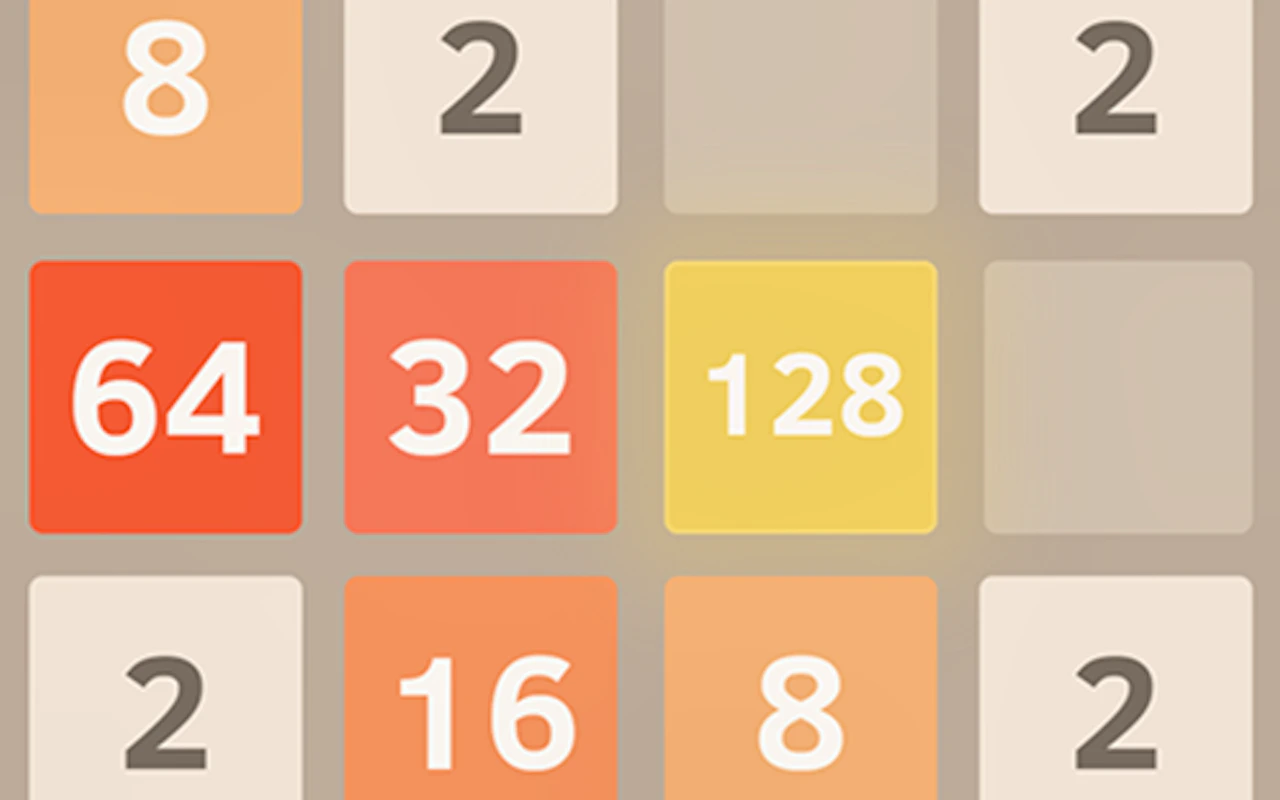
2048 is the obvious first stop and still the best. Equal numbers combine into their sum, and every swipe drops a new tile somewhere on a tight board. Play on autopilot and it clogs within a minute. Keep a corner for your biggest tile, keep lanes open and think two swipes ahead, and you'll get much further. There's no luck you can blame here that you couldn't have planned around a little better.
Merge Royal borrows that idea and crosses it with Solitaire: cards join when their values match and the totals climb. It's a good pick if plain number tiles bore you, and it's laid out for a phone held upright.
Fruit Merger is the drop-and-merge version. Two identical fruits become a different one, and the clutter grows faster than you'd expect. It is really about where things land. Drop carelessly and you bury a small piece under a big one, and that mistake follows you for the rest of the round.
Sort games: the calmest kind of hard
Sort puzzles have no gravity, no timer and usually no surprises. Everything you need is on screen. That makes them the fairest genre here and, oddly, the easiest one to get stuck in.
Pour Sort is the classic liquid version: tip one tube into another until each holds a single colour. Juice Sort does the same with drinks and glasses, and the advice in its own description is the whole strategy in a sentence: use the empty glass wisely and don't trap a flavour at the bottom.
The trap in both is the same. You make a tidy-looking move that fills your only free space, and three moves later nothing can go anywhere. The fix is to treat the empty container as precious and only fill it when you can see how you'll empty it again.
For offline play on a phone, Water Sort Puzzle is a free store game with a 4.7 rating, hundreds of levels that ramp up slowly, and free restarts. It works offline, which makes it a reasonable choice for a flight.
Match-3: read the board, not the sparkle
Match-3 is where the fair-versus-stalling split matters most, because the genre's commercial versions lean hard on boosters and limited moves.
In the browser, Starglint Sky Match is a straightforward board: swap neighbours, make rows of three or more, look for combos. It doesn't try to be anything else. That's fine. Sometimes you want the plain version without a story wrapped round it.
If you do want a story, Match Mystery reveals one as you clear levels. Its levels don't run out and they get harder as you go, so sloppy matching that worked early stops working later. That's the right way round.
Chain Brawl is the odd one: every match you chain becomes damage against an opponent. It shifts your thinking from "clear the board" to "build the combo", which is a more interesting decision than most match-3 games ask for.
On the store side, two are worth knowing about. Royal Match is free with a 4.7 rating, and each level you clear funds repairs to a crumbling castle. It mixes in obstacles and power-ups you can combine. Match Masters, also free and rated 4.7, is the one I'd point competitive players towards: you and a live opponent take turns on the same board, so every move also sets up what the other person gets. It needs a connection, since every game is against a real person.
How to tell if you're being stalled
A few quick checks before you sink an evening into any of these:
- Lose a level, then replay it. If the same plan gets you closer, the game is fair. If the outcome swings wildly between attempts, luck is doing most of the work.
- Watch where the "almost" moments land. One move short every single time is a design choice, not bad luck.
- Count the interruptions. Ice Jewel Match is free with a 4.6 rating and more than a thousand levels, but its own listing says pop-up ads interrupt play and removing them costs a VIP subscription from $3.99 a week. That's worth knowing before you get attached.
None of these checks needs a stopwatch or a spreadsheet. Two or three sessions tell you plenty.
Where to start
If you only try one, make it 2048. It takes about ten seconds to learn and teaches the habit every other game here rewards: look at the whole board before you move. After that, a sort game will feel slow and satisfying, and a match-3 will feel like a slightly noisier version of the same discipline.
Skip the store versions if you dislike ads or anything that nudges you towards a purchase. Skip the browser versions if you want a long campaign with a castle to rebuild. Both camps have good games in them; they're just good at different things.
For more boards that aren't about matching, the site's list of puzzle games for a lunch break covers the slower, think-first end of the shelf, all of them no download and ready in a tab.