Old Arcade Ideas That Still Work in a Browser Tab
By IPObrains Editorial 6 min read
Six arcade ideas older than most players, the browser games that carry them on, and one habit from the old arcade regulars for each.
Put a snake on a grid, give it a tail that keeps growing, and you have a game people were losing sleep over long before anyone owned a smartphone. Nothing about that has worn out. A lot of what sits in the Arcade and Classics sections of this site is a fresh coat of paint on one of a handful of old designs: blocks that fall, the snake, a paddle and some bricks, a lone ship under a sky of invaders. Each one survives on a single source of pressure that never lets up. The snake keeps moving. Gravity keeps pulling.
The paint is where remakes tend to go wrong. Coins, countdowns, unlockable characters, a shop icon blinking in the corner. Some of that is harmless enough. Plenty of it just gets in the way of a design that was already complete the first time round. So here are six of those old ideas, the games here that carry them, and for each one a habit that good arcade players picked up years ago and that still pays off today.
Things that fall
I'll start with an awkward one. There isn't a straightforward falling-blocks game in Classics or Arcade right now, which feels like an obvious hole. The closest relative is Spiral Blitz. A ball drops down a tower of spinning platforms, and you turn the tower so there's always a gap beneath it, keeping clear of the coloured barriers as you go. It plays in portrait.
Stacking veterans had one rule above the rest: keep the top flat and don't ever cover a hole. Carried over to Spiral Blitz, it means giving yourself some margin in whichever gap you're aiming the ball through, rather than threading it at the last moment.
The snake family
Snake might be the cleanest arcade idea on the whole site, and it's also the one that has had the most bolted on. Strip it back and the original is you, your own tail, four walls and a death you can see coming. Every addition waters that down a little.
Skibidi Snake stays fairly close to the source. You get longer by eating numbers, and you're finished if you run into your tail or one of the obstacles in the arena. It's portrait with touch controls, or keyboard on a computer. The only question that matters is where your tail will be three moves from now.
Then there's the arena route, taken by Worms Zone as well as Gusano.io Worms Snake Game: rival worms share the map with you and the aim is to finish as the longest. Honestly, it's a different game dressed up as snake. Look at what got added, too: power-ups, plus outfits to dress your worm in. Both play in landscape, with mouse or keyboard.
The veterans' habit here: don't turn into empty space. Work the board in neat rows, the way you'd mow a lawn, and break the pattern only for food sitting one move away from your line. Whoever zigzags through the middle is the first to go.
Balls that bounce
Oddly, these two sections have no basic brick-breaker or paddle game either. Instead there's Boing Bang, which takes the other classic bouncing-ball idea. You carry a blaster, big balls ricochet round the room, and every hit splits a ball into smaller ones. Landscape, mouse and keyboard. The pressure comes from how many bouncing paths you're tracking at the same time. If a game in this family adds a countdown, be suspicious. A timer there usually means the designers didn't trust the bouncing to carry the tension by itself.
The veteran's habit: mop up the small balls before you split the next big one, so the room never gets crowded. Plenty of runs die because someone broke a large ball while little ones were still flying about.
One button and nothing else
This family has the most games and the most clutter, since building a one-button game costs very little and very easy to ruin.
Geometrical Dash is close to as bare as it gets. A square runs along, you tap to jump, and spikes kill you. It counts your attempts. Landscape.
Spikes & Feathers is a flapper, drawn by hand and played in portrait. Rhythm matters more than speed, and fresh obstacles keep turning up to push the difficulty along.
Hook is where the extras start sneaking in. The core is swinging between hooks with good timing and precision. Along the way it hands out new characters, which is a reason to keep going that has nothing to do with swinging. Swing for the sake of swinging and treat the outfits as background noise.
What the regulars knew: watch the space in front of your character, not the character itself. Your character shows where you were. The spike shows where you're about to be. Keep taps brief, too. Holding the button down is the wrong move in most of these games, and a quick press nearly always does better.
Mazes and the things that hunt you
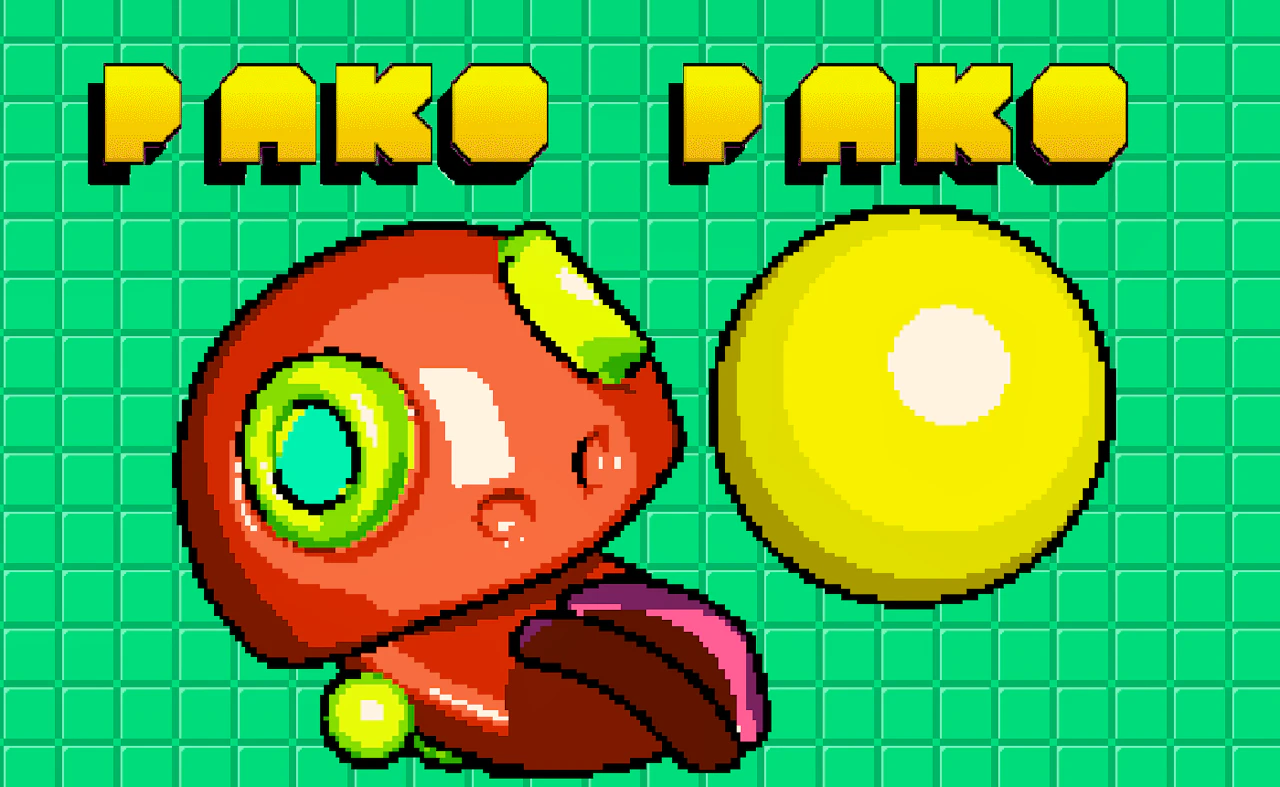
Paco Paco is the maze-and-pellets formula played straight, only in 3D, played in landscape with mouse or keyboard. A sphere gobbles pellets, ghosts give chase, and an empty maze opens up the next. The 3D view can make corners trickier to judge than they'd be on a flat grid, and it ramps up as you progress.
BattleBox bends the maze idea towards memory. There's a hidden grid with treasure and monsters under the tiles, and strawberries keep you going. Call it a cousin rather than a remake. Still, it shares that feeling of each step uncovering one more thing you now need to hold in your head.
Maze regulars always said: deal with the fiddly corners early, while the ghosts are still sluggish and the board is still crowded with pellets. Leave the pellets in a dead end until last and they'll probably cost you a life.
Shooters and a filling sky
One ship at the bottom, waves above it. This is the old idea that has collected the most baggage, because upgrades slot into it so easily. The original offered nothing of the sort. A gun, and aliens coming down.
Strike Galaxy Attack is a portrait shooter: one ship, wave after wave of space birds, and upgrades to grab as you go. The harder you rely on them, the further the game drifts from that plain gun-versus-aliens setup.
Evil Invader comes at it from the opposite end. Landscape, mouse and keyboard, a whole arsenal of weapons plus power-ups and levelling. It's really a survival shooter that borrowed the invader name.
The habit people forget: aim where the enemy is going to be half a second from now, not at its current spot. And when a power-up drifts into the path of incoming fire, let it go. A power-up that costs you a life was bait all along.
Before you go
Simple designs like these usually run lighter than big 3D titles, Paco Paco being the obvious exception, and our guide to lighter games for older phones explains why. For the tougher, nastier side of arcade play, the top action games list is the next stop.
Here's a small experiment, if you're up for it. Choose one of the six ideas, load its plainest version, and play ten rounds while ignoring every coin, upgrade and bonus on offer. Then ask yourself whether you missed any of it. I'd bet the score didn't suffer.